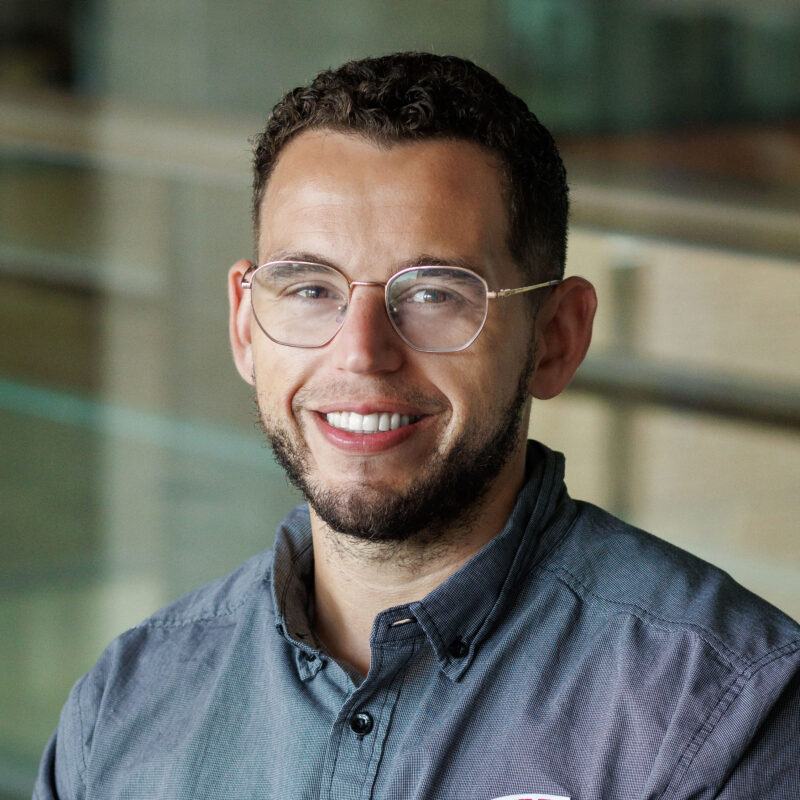
Nathaniel Jenkins
Associate Professor
319 Service Memorial Institute
1300 University Ave
Madison, WI 53706
Nathaniel Jenkins, PhD, FAHA, is an Associate Professor of Kinesiology and Population Health Sciences and directs the Vascular Stress Physiology and Resilience (VSPR) Lab. His lab studies how psychosocial and environmental stressors, including adverse childhood experiences, shape blood vessel health across the lifespan. By pairing human vascular physiology, cellular and mitochondrial biology, and behavioral observation and manipulation, the lab examines what drives cardiometabolic disease risk in high-risk populations before disease becomes clinically apparent. Sleep, diet, and physical activity are measured as everyday exposures that shape vascular and metabolic function, and are manipulated experimentally to test causal mechanisms in humans. Jenkins is a Fellow of the American Heart Association, a Consulting Editor for the American Journal of Physiology: Heart and Circulatory Physiology, and a Standing Member of the NIH Center for Scientific Review’s Biological Processes and Social-Ecological Factors Study Section.
Select Media Contributions
- Guest Host, American Journal of Physiology: Heart and Circulatory Physiology Podcast. “Allostatic Load and Cardiometabolic Health.” https://ajpheart.podbean.com/e/allostatic-load-and-cardiometabolic-health/
- “The Middle Miles: The Race Is the Training”. Physiologist Magazine. July 2026. https://www.physiology.org/publications/news/the-physiologist-magazine/last-word/what-running-taught-this-researcher-about-building-a-research-career.
- “Emotional Overload: How Grief and Trauma Course Throughout your Body”. Physiologist Magazine. July 2023. https://www.physiology.org/docs/default-source/tphysmag2019/the-physiologist-magazine-july2023.pdf
- “The Best Adjustable Dumbbells”. Wirecutter, New York Times. July 2023. https://www.nytimes.com/wirecutter/reviews/the-best-adjustable-dumbbells/
Select Publications
- Jenkins NDM, Rogers EM, Banks NF, et al. Childhood psychosocial stress is linked with impaired vascular endothelial function, lower SIRT1, and oxidative stress in young adulthood. Am J Physiol Heart Circ Physiol. 2021;321(3):H532–H541. https://doi.org/10.1152/ajpheart.00123.2021
- Jenkins NDM, Robinson AT. How do adverse childhood experiences get under the skin to promote cardiovascular disease? A focus on vascular health. Function. 2022;3(4):zqac032. https://doi.org/10.1093/function/zqac032
- Rogers EM, Banks NF, Tomko PM, et al., Jenkins NDM. Progressive exercise training improves cardiovascular psychophysiological outcomes in young adult women with a history of adverse childhood experiences. J Appl Physiol. 2023;134(3):742–752. https://doi.org/10.1152/japplphysiol.00524.2022
- Carlson AS, Schwager LE, Hart TW, et al., Jenkins NDM. Interactions of chronic stress exposure and stress appraisal on vascular endothelial function among young adults. J Appl Physiol. 2025;138(3):783–791. https://doi.org/10.1152/japplphysiol.00457.2024
- Jenkins NDM, Boyes NG, Jacob DW, Shariffi B, Martin SA, Limberg JK. Habitual sleep duration is associated with heightened muscle sympathetic nerve activation and blood pressure reactivity in response to the cold pressor test. J Appl Physiol. 2025;139(5):1293–1299. https://doi.org/10.1152/japplphysiol.00808.2025
- Banks NF, Rogers EM, Stanhewicz AE, Whitaker KM, Jenkins NDM. Resistance exercise lowers blood pressure and improves vascular endothelial function in individuals with elevated blood pressure or stage-1 hypertension. Am J Physiol Heart Circ Physiol. 2024;326(1):H256–H269. https://doi.org/10.1152/ajpheart.00386.2023
- Rogers EM, Banks NF, Trachta ER, et al., Jenkins NDM. Resistance exercise breaks during prolonged sitting augment the blood flow response to a subsequent oral glucose load in sedentary adults. Exp Physiol. 2026;111(6):3082–3098. https://doi.org/10.1113/EP091535
- Rogers EM, Banks NF, Jenkins NDM. The effects of sleep disruption on metabolism, hunger, and satiety, and the influence of psychosocial stress and exercise: a narrative review. Diabetes Metab Res Rev. 2024;40(2):e3667. https://doi.org/10.1002/dmrr.3667
- Jones R, Robinson AT, Beach LB, et al., Jenkins NDM. Exercise to prevent accelerated vascular aging in people living with HIV. Circ Res. 2024;134(11):1607–1635. https://doi.org/10.1161/CIRCRESAHA.124.323975
- Carter JR, Jenkins NDM, Bigalke JA, et al., Joyner MJ. Guidelines for rigor and reproducibility of heart rate variability within human cardiovascular research. Am J Physiol Heart Circ Physiol. 2026;331(3):H918–H943. https://doi.org/10.1152/ajpheart.00041.2026
Select Awards and Honors
- Best Impact Paper. Banks et al. Resistance exercise lower blood pressure and improves vascular endothelial function in individuals with elevated blood pressure or stage-1 hypertension. AJP Heart and Circulatory Physiology. American Physiological Society, 2026.
- Young Alumnus Achievement Award. Messiah University, November 2024
- Shih-Chun Wang Young Investigator Award, American Physiological Society (2024)
- New Investigator Award, APS Environmental and Exercise Physiology Section (2024)
- Star Reviewer, American Journal of Physiology – Heart and Circulatory Physiology (2023)
- Fellow of the American Heart Association (FAHA) (2021)
- Terry J. Housh Outstanding Young Investigator Award, National Strength and Conditioning Association (2018)
- NIH Clinical Research Loan Repayment Program Award (three-time recipient)
- Standing Member, Biobehavioral Mechanisms of Emotion, Stress, and Health (MESH) Study Section, National Institutes of Health
- American Heart Association, Research Committee, Member (2020-2024)